7 Social Security Changes in 2026 Californians Need to Know

Social Security is changing in 2026. If you’re receiving or planning to claim benefits, these updates can directly affect your monthly income and health care costs. While some changes bring modest increases, others — like rising Medicare premiums — may offset some of your gains.
Learning about what changes are happening and what they mean for you as a Californian can enable you to make informed retirement decisions. Health for California can also help you choose the optimal Medicare coverage to mitigate the changes’ impact and protect your financial security.
What Changes Are Coming to Social Security in 2026?
Significant Social Security changes Californians need to know took effect in January 2026. These adjustments affect monthly benefit amounts, Medicare costs, retirement age requirements and how benefits interact with earned income.
1. Cost-of-Living Adjustment (COLA)
The 2026 COLA is 2.8%, providing 75 million Americans with increased benefits starting this January. This adjustment increased from 2.5% in 2025 and is based on the Consumer Price Index. The average monthly increase breaks down as follows:
| Member Category | Average Monthly Increase | Average Price Change |
|---|---|---|
| Retired Workers | $56 | From $2,015 to $2,071 |
| Aged Couple | $88 | From $3,120 to $3,208 |
| Aged Widow or Widower | $52 | From $1,867 to $1,919 |
| Widowed Mother With Two Children | $106 | From $3,792 to $3,898 |
| Workers With Disabilities and With Spouse and One or More Children | $80 | From $2,857 to $2,937 |
| All Other Workers With Disabilities | $44 | From $1,586 to $1,630 |
Over the past decade, COLA increases have averaged approximately 3.1%. These adjustments are meant to help benefits keep pace with inflation. While any increase helps, COLA concerns due to Social Security changes center on whether these adjustments truly match rising costs Californians face — particularly for health care, housing and groceries.
2. Medicare Premiums
In 2026, Medicare Part B premiums increase to $202.90 per month — up $17.90 from 2025. This nearly 10% jump significantly impacts those on fixed incomes, including Supplemental Security Income (SSI) recipients. Additional Medicare cost changes include:
| Medicare | Average Monthly Increase | Average Price Change |
|---|---|---|
| Part B | $26 | From $257 to $283 |
| Part A | $60 | From $1,676 to $1,736 |
Higher earners may also experience premium increases, with couples earning over $750,000 paying up to $689.90 monthly. Because premiums are automatically deducted from Social Security checks, the $17.90 increase absorbs approximately one-third of the average COLA raise. However, the hold-harmless provision ensures that, for most beneficiaries, Medicare Part B premium increases won’t reduce their total Social Security check from the prior year.
3. Full Retirement Age (FRA)
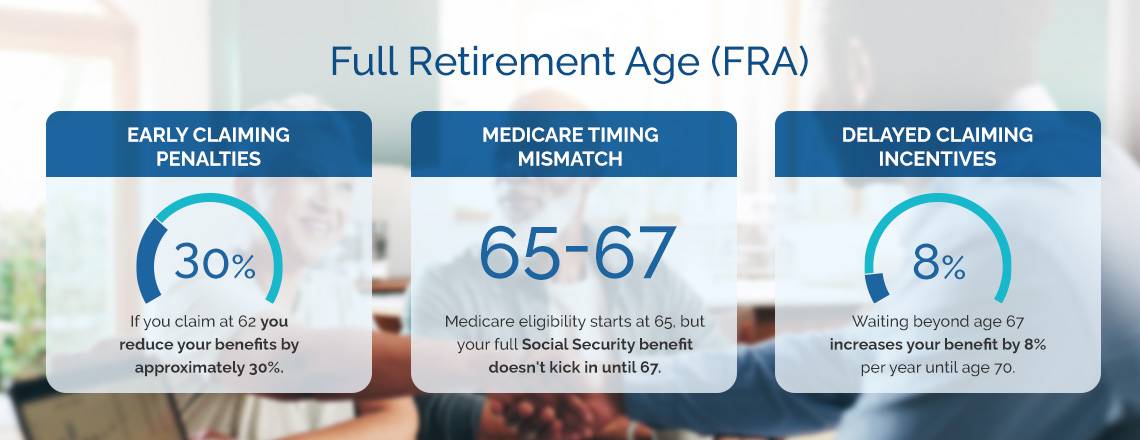
While the FRA isn’t changing in 2026, it’s critical to understand that the FRA has already increased to 67 for anyone born in 1960 or later. Most Californians approaching retirement today face a higher age threshold than previous generations.
Understanding retirement age helps you coordinate Social Security and Medicare decisions to maximize your retirement income. Here’s how the age limit impacts your 2026 benefits:
- Early claiming penalties: Claiming Social Security before age 67 permanently reduces your monthly benefits. If you claim at 62, which is the earliest possible age, you reduce your benefits by approximately 30%.
- Medicare timing mismatch: Medicare eligibility starts at 65, but your full Social Security benefit doesn’t kick in until 67. You need to carefully plan for this two-year gap to avoid coverage lapses or unexpected out-of-pocket costs.
- Delayed claiming incentives: Waiting beyond age 67 increases your benefit by 8% per year until age 70, when the increases stop.
4. Limitations on Earnings
As part of the 2026 changes to Social Security benefits, the following limitations on earnings apply:
| Limitations on Earnings | Benefits Reduction | |
|---|---|---|
| If you’re under FRA all year | $24,480 annually or $2,040 monthly | For every $2 you earn above this amount, Social Security withholds $1 in benefits. |
| If you reach FRA during the year | $65,160 covering the months before your birthday | For every $3 you earn above this amount, Social Security withholds $1 in benefits. |
| If you’ve already reached FRA before the year began | No limits apply | No benefits reduction |
Social Security retirement benefits serve as income replacement for people who have stopped working or significantly reduced their work. The earnings limits exist to ensure the program serves this core purpose. However, you don’t lose the benefits withheld due to excess earnings. When you reach FRA, Social Security recalculates your benefit to give you credit for the months it withheld the amounts. This adjustment results in a slightly higher monthly payment going forward.
Only wages from employment and net self-employment income count toward these limits. Pensions, annuities, investment income and interest don’t affect your benefits.
5. Tax Treatment of Benefits
California doesn’t tax Social Security benefits at the state level, providing some relief. However, benefits may be taxable at the federal level if your combined income exceeds certain thresholds. This income includes your adjusted gross income plus nontaxable interest and half of your Social Security benefits:
| Filing Status | Up to 50% of Benefits are Taxable | Up to 85% of Benefits are Taxable |
|---|---|---|
| Individual Filers | Combined income ranges from $25,000-$34,000 | Combined income is more than $34,000 |
| Joint Filers | Combined income ranges from $32,000-$44,000 | Combined income is more than $44,000 |
6. Medicare Prescription Drug Coverage
Medicare Part D prescription drug coverage and costs are changing in 2026, which affects your out-of-pocket medication expenses. Costs also differ per plan and carrier. Higher earners may pay additional premiums on top of standard plan costs.
You must review your plan terms during the open enrollment period to ensure it still covers your prescriptions at reasonable prices. Late enrollment penalties apply if you don’t sign up for Part D during your initial enrollment period and don’t have other creditable coverage. The penalty is 1% of the national base premium multiplied by the number of months without coverage. These penalties are permanent and continue for the rest of your life as long as you maintain Part D coverage, making timely enrollment critical.
7. Timing Considerations
To fully understand how the 2026 Social Security changes affect Californians, it’s best to learn how Medicare price changes impact Social Security benefits. With Medicare premiums rising faster than COLA, coordinating Social Security and Medicare decisions has become increasingly critical.
The Social Security Administration automatically deducts Medicare premium payments from your Social Security benefits. However, even if you delay claiming Social Security — say, past age 65 — to increase your benefit amount later on, you still need to enroll in Medicare at 65, unless you have employer coverage. Missing your enrollment window triggers a permanent 10% penalty on your Part B premium for every 12 months you delay.
Because of the automatic premium deductions, rising Medicare costs directly reduce your net benefit amount. Choosing between Medicare Advantage and Medicare Supplemental plans affects out-of-pocket expenses and monthly costs. Understanding how Social Security benefits and Medicare work together can protect your retirement security.
How Health for California Helps You Navigate All 7 Changes
It’s possible to navigate the Social Security changes with ease. As licensed, independent advisors, we work with multiple carriers to provide unbiased guidance. Our team can explain Medicare Advantage, Medicare Supplemental and Part D options in simple language. We’ll help you compare plans, understand your choices and enroll in coverage that works with your Social Security income.
Whether you’re approaching 65 or managing Medicare premiums with your benefits, our consultations, webinars and other resources make it easy to understand your options and make informed decisions. If you’re ready to take control of your retirement health care costs, contact us today for a free consultation.