How Does Travel Health Insurance Work for California Residents?

You’ve booked your dream trip. Your bags are packed, your passport is ready, and your excitement is building. But have you thought about what would happen if you got sick or injured while you’re abroad?
Most California residents don’t realize their health insurance plans offer little to no coverage for medical care outside the United States. Whether you have coverage through Covered California, an employer-sponsored Preferred Provider Organization (PPO) or Medicare, an unexpected illness or injury overseas can leave you facing massive out-of-pocket costs.
Travel health insurance fills this critical coverage gap. This guide explains how it works, who needs it, what to look for in a policy and how you can get covered before your next international trip.
What Is Travel Health Insurance?
Travel health insurance is a supplemental policy that fills the gaps left by domestic insurance plans when you travel outside your home country. It’s a short-term, temporary policy. It covers medical emergencies and health-related incidents that may occur while you’re traveling internationally.
Your travel health insurance becomes your main source of protection the moment you leave U.S. borders.
How Does Travel Health Insurance Work?
You generally pay for medical services up-front at the time of treatment, then file a claim for reimbursement with your insurance carrier after you return home or while you’re still traveling. However, for a major hospitalization or emergency surgery, many insurance companies coordinate directly with the hospital to handle payment, reducing the financial burden on you during a crisis.
Most policies include a deductible, which is the amount you pay out of pocket before the insurance begins covering expenses. After you meet the deductible, the insurance typically covers a percentage of your costs through a coinsurance structure. For example, many travel health insurance plans use an 80/20 coinsurance split. The insurance pays 80% of covered expenses, and you pay the remaining 20% up to your policy’s out-of-pocket maximum.
Why California Residents Need Travel Health Insurance
If you’re wondering whether travel health insurance is worth it, the reality is that you can’t rely on your California health coverage once you leave the country. Without travel insurance, health issues during your trip can result in financial disaster for several reasons, including:
1. Your California Health Plan Has Limited Reach
Most domestic health plans offer little to no coverage for substantive medical care overseas, especially outside of emergencies. The type of plan you have determines your level of risk.
- Health Maintenance Organizations (HMOs) and Exclusive Provider Organizations (EPOs): HMOs and EPOs do not cover care outside the U.S., except in rare, life-or-death emergencies that must meet a very strict definition. If you have an HMO through Covered California or your employer, assume you have zero coverage the moment you board your international flight.
- Preferred Provider Organization (PPO): While some PPO plans provide out-of-network coverage that may extend overseas, this coverage is often subject to high deductibles and significant coinsurance. PPO plans rarely cover essentials like medical evacuation, which can be the most expensive component of an international medical emergency.
- Medicare: Medicare does not provide coverage outside of the United States. However, there are extremely limited exceptions for certain emergencies in Canada or Mexico.
2. International Healthcare Costs Are Unpredictable
The cost of health care for nonresidents varies widely across countries. These costs can be high, depending on where you travel and what treatment you need. Even in countries with nationalized health care systems, tourists and noncitizens are often billed at higher private-pay rates. While these costs may be more affordable than U.S. health care, they’re unpredictable and can quickly add up.
Potential costs you’d have to cover when traveling without health insurance include:
- Emergency room visit for a sprained ankle or minor injury
- Multiday hospital stay due to food poisoning or severe illness
- Emergency surgery for appendicitis or other acute conditions
- Medical evacuation by air ambulance to another hospital or back to the United States
3. A Safety Net for Emergencies Abroad
Travel health insurance does more than cover healthcare costs. It provides critical services that can make the difference between a manageable situation and a nightmare scenario. That support matters.
Most quality policies include 24/7 multilingual assistance lines staffed by professionals who can help you find a reputable doctor, navigate a foreign hospital system and manage a medical crisis in real time.
When you’re dealing with a health emergency abroad, having access to expert support is invaluable. These assistance services help coordinate care, arrange payments and ensure you receive appropriate treatment.
What a Good Travel Medical Policy Should Cover
Coverage options included in travel health insurance for California residents vary. When evaluating coverage options, California residents should look for the following benefits:
Emergency Medical Expenses
Emergency medical expense coverage is a core benefit of any travel health insurance policy. It pays for immediate medical care if you have an unexpected illness or injury while you’re abroad.
A comprehensive policy should include coverage for:
- Hospital room charges and intensive care unit (ICU) stays
- Surgical procedures and operating room fees
- Physician visits and specialist consultations
- Ambulance services and emergency transportation
- Prescription medications required for acute conditions
- Diagnostic tests and imaging, such as X-rays, MRIs and CT scans
Emergency Medical Evacuation
This benefit covers the cost of transportation to the nearest medical facility that can provide appropriate care for your condition. In some cases, this means transport back to the United States if local facilities cannot adequately treat your illness or injury.
Emergency medical evacuation coverage is not a flight home on demand. It applies only when evacuation is medically necessary, as determined by medical professionals and your insurance carrier.
Acute Onset of Preexisting Conditions
Acute onset coverage applies to a sudden and unexpected flare-up of a stable preexisting condition. It covers any medical issue you had before purchasing your travel insurance policy, such as asthma, diabetes, heart conditions or high blood pressure.
For example, if you have controlled asthma and experience a sudden, severe asthma attack while traveling, acute onset coverage would apply. However, this is not coverage for routine care or expected treatment of an ongoing condition.
Repatriation of Remains
While no one wants to think about worst-case scenarios, repatriation coverage addresses a difficult reality. It covers the high costs of returning a deceased person’s body to their home country. This benefit provides financial protection and logistical support to families during an already difficult time.
Other Benefits
Beyond the core coverage areas, several additional benefits enhance your protection and peace of mind while traveling:
- Accidental death and dismemberment (AD&D) provides a cash benefit if you suffer a covered loss, such as death or loss of a limb, in an accident.
- 24/7 traveler assistance provides access to multilingual support staff who can help with medical referrals, translation services and emergency coordination.
- Trip interruption covers the cost of returning home early if your trip is cut short due to a covered medical emergency.
Who Needs Travel Health Insurance?

Understanding whether you need international travel health insurance as a California resident depends on your travel plans and personal situation. Nearly everyone traveling abroad can benefit from this coverage, but certain groups face particularly high risks without it.
- The international vacationer: Whether you’re going on safari, trekking through the Alps or lounging on a beach, travel health insurance provides peace of mind that you can access appropriate care without facing financial devastation if something goes wrong during your vacation.
- Students studying abroad: Many universities and visa programs mandate travel health insurance as a condition of enrollment or entry. Beyond meeting these requirements, students spending months abroad are more likely to need medical care simply because of the extended duration of their stay.
- Digital nomads: Whether you’re planning a six-month stay in Ho Chi Minh or a year in Riyadh, know that domestic health plans do not cover long-term international living. Travel health insurance is essential for these extended stays abroad.
- Business travelers: You might assume a five-day conference in Dubai or a 48-hour deposition in London carries minimal risk. However, medical emergencies don’t discriminate based on trip length or purpose. Travel health insurance is beneficial regardless of the length of your trip.
Important Limitations and Exclusions You Should Consider
Travel health insurance offers many benefits, but it doesn’t cover every situation when you’re traveling. Here are the common exclusions you should consider to help you make informed decisions and avoid surprises when filing claims.
General Treatment for Preexisting Conditions
Most standard travel health insurance policies exclude general treatment for preexisting conditions unless you purchase a specific, high-cost rider. Routine care, maintenance medications and expected treatment for chronic conditions are typically not covered. Only sudden, acute flare-ups of stable conditions may qualify for coverage under acute onset provisions.
High-Risk Adventure Sports
Many policies exclude injuries sustained while participating in high-risk adventure activities, like skydiving, backcountry skiing, mountain climbing and scuba diving below certain depths. If your trip includes adventure sports, look for policies that offer adventure riders. Some travel health insurance options can cover these for an additional premium.
Injuries Sustained While Intoxicated
Injuries or illnesses that occur while you’re under the influence of drugs or alcohol are excluded in most travel health insurance policies. If your claim involves circumstances where intoxication played a role, expect denial of coverage.
Routine or Elective Procedures
Travel health insurance covers emergency and unexpected medical needs only. Routine checkups, preventive care, elective procedures, cosmetic surgery and planned treatments are not covered. Don’t purchase travel health insurance expecting to use it for scheduled medical care abroad.
Travel to Countries With Government Advisories
If you travel to destinations with a Level 4 “Do Not Travel” advisory issued by the U.S. Department of State, your policy may be voided. Insurance carriers typically exclude coverage for travel to war zones, areas with extreme civil unrest or regions where travel is officially discouraged due to safety concerns. Always check current travel advisories before purchasing your policy and departing.
Travel Health Insurance vs. Other Options
Understanding how travel health insurance compares to potential alternatives helps clarify why dedicated coverage is necessary.
Your PPO Plan’s Global Coverage
Some PPO plans advertise global or worldwide coverage, but this coverage is often minimal and comes with significant limitations. Out-of-network reimbursement rates may be low, leaving you responsible for substantial balances.
More importantly, PPO plans virtually never include emergency medical evacuation coverage, which represents the highest-cost risk of international travel. Relying solely on PPO out-of-network benefits often leaves you underinsured.
Credit Card Travel Insurance
Many premium credit cards offer travel insurance as a cardholder benefit, but these benefits focus primarily on financial protection rather than medical coverage. Credit card travel insurance typically covers trip cancellation, trip interruption, lost baggage and travel delays.
Medical benefits through credit cards are often secondary coverage with low coverage limits that are insufficient for serious medical emergencies. These policies also exclude many benefits that dedicated travel health insurance includes, such as 24/7 medical assistance and comprehensive evacuation coverage.
Trip Insurance
Trip insurance protects your financial investment in the trip itself. It reimburses you for nonrefundable expenses if you must cancel or interrupt your trip due to covered reasons. It doesn’t cover medical expenses while you’re traveling.
You often need both types of coverage. Comprehensive travel insurance plans bundle trip protection and medical coverage into a single policy, making it a convenient option for complete protection.
How to Get Travel Health Insurance
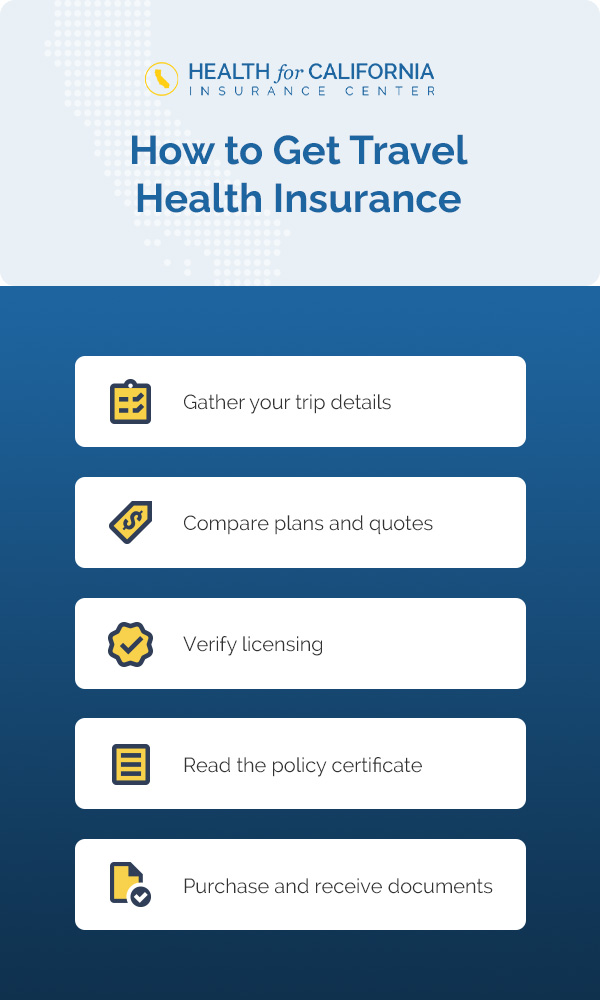
Purchasing travel health insurance as a California resident is straightforward once you understand the information you need and where to find reliable coverage.
1. Gather Your Trip Details
Before requesting quotes, compile essential information about your trip. Carriers need to know who is traveling, exact travel dates including departure and return, all destinations you plan to visit, and the ages of all travelers. This information determines your premium and ensures your policy covers your specific itinerary.
2. Compare Plans and Quotes
Use an independent broker to compare plans from multiple top-rated carriers at once. Independent brokers aren’t tied to a single insurance company, which means they can show you options from various carriers and help you identify the plan that best matches your needs and budget. This comparison shopping ensures you’re getting appropriate coverage at a competitive price.
3. Verify Licensing
California residents are encouraged to verify an insurer’s license and find information on the California Department of Insurance website. Licensed carriers meet state regulatory requirements and provide an additional layer of consumer protection. You can check an insurance company’s license status and complaint history before purchasing your policy.
4. Read the Policy Certificate
Review the policy details before buying. Understanding what is and isn’t covered prevents surprises if you need to file a claim. If anything is unclear, ask questions before you purchase.
5. Purchase and Receive Documents
The purchase process is typically completed online and provides instant confirmation. You’ll receive your policy documents and insurance identification card via email immediately after purchase. Print these documents or save them to your phone so you have access to your policy information and the 24/7 assistance phone number while traveling.
Planning a Trip? Health for California Can Help
Traveling abroad from California is an incredible experience, but your domestic health plan won’t travel with you. International travel health insurance is the only way to protect yourself from catastrophic medical bills and ensure you have support during a crisis overseas.
At Health for California, our licensed, California-based experts specialize in helping residents find the right travel health insurance coverage for their needs. We make the process simple. You can compare plans from multiple top-rated carriers, get personalized recommendations and purchase your policy online in minutes.
Whether you’re planning a family vacation, a semester abroad or an extended stay in another country, we’ll help you find affordable coverage that protects your health and your wallet.
Request a free travel health insurance quote today, or explore your coverage options to find the plan that’s right for your trip.